Introduction
The logistics industry is the backbone of global trade, responsible for the seamless movement of goods and materials across vast distances. However, the challenges of managing complex supply chains and monitoring maritime traffic can be daunting. This is where the power of computer vision comes into play, enabling the detection and tracking of vessels with unprecedented accuracy and efficiency.
Vessel detection is a critical component of logistics operations, providing real-time insights into the movement and status of ships transporting goods. Accurate vessel detection can help logistics managers optimize routes, reduce delays, and mitigate the risk of lost or damaged cargo.
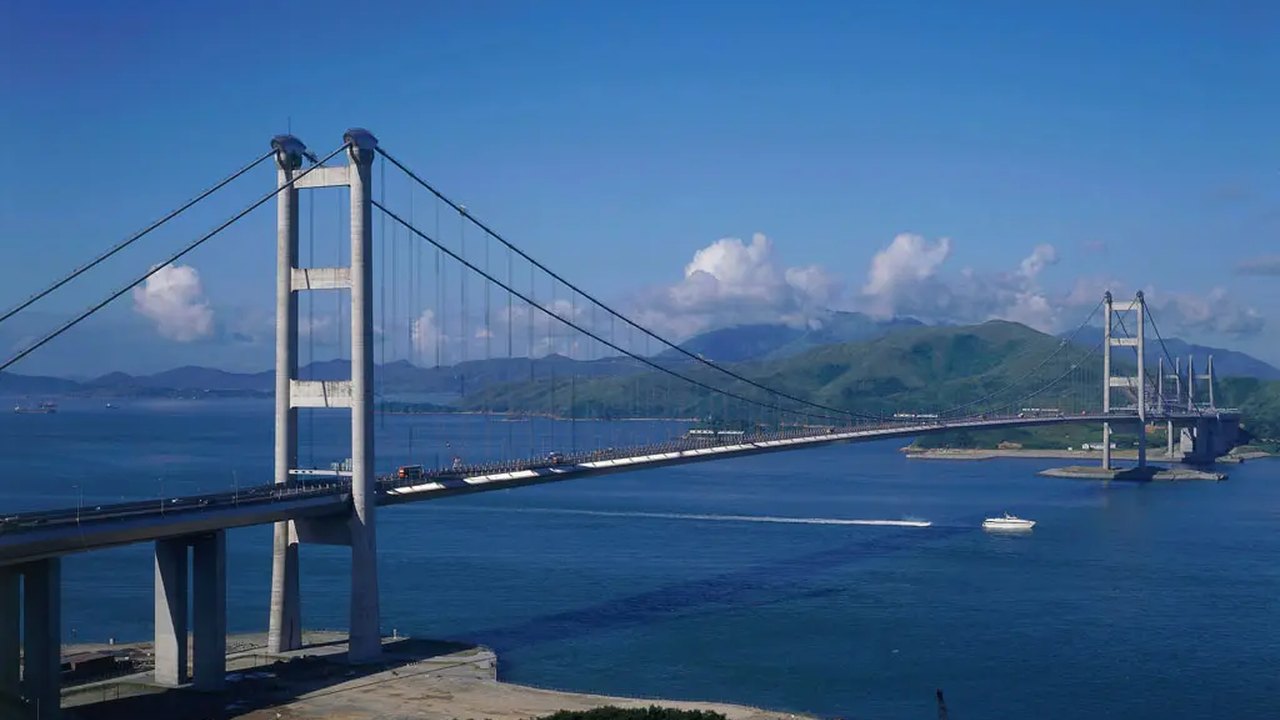
Additionally, it can aid in the monitoring of port activities, asset management, and regulatory compliance. Detecting the height of vessels as they navigate waterways is also a critical component of logistics operations, particularly when it comes to preventing costly bridge collisions.
Tall ships or vessels carrying oversized cargo can pose a significant threat to infrastructure if their height is not properly monitored and managed. Accurate vessel height detection can help logistics managers optimize routes, avoid delays, and mitigate the risk of damage to both cargo and public property.
This is especially important in regions like Hong Kong, which is surrounded by the ocean and consists of many islands. Hong Kong has busy boat traffic as well as numerous bridges connecting the islands to allow people to travel between them, making vessel height detection a crucial consideration for logistics operations in the area.
Problem
While vessel height detection is a critical capability for logistics operations, it is not without its challenges. Environmental factors, such as weather conditions, can significantly impact the accuracy of height measurements. Heavy rain, fog, or choppy waters can make it difficult for computer vision systems to clearly define the vessel’s outline and waterline, leading to potential errors in height calculations.
Additionally, the load and distribution of goods on a vessel can affect its draft and overall height above the water, requiring advanced algorithms to account for these dynamic variables. Vessel type is another complicating factor, as different ship designs and cargo configurations may require specialized detection models.
Our proposed solution
Recent advances in computer vision have changed how the logistics industry approaches vessel detection. Deep learning models can analyse camera imagery and other sensor inputs to identify and track vessels with high precision.
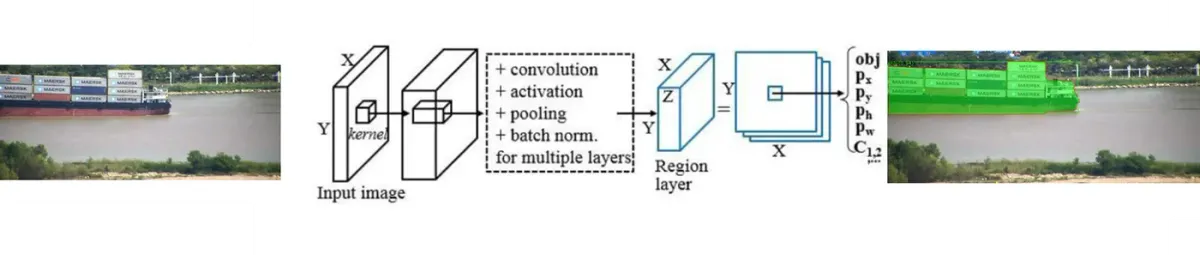
Two primary computer vision methods are often employed for vessel detection: bounding box detection and instance segmentation.
Application
Environmental conditions can significantly affect the quality and clarity of vessel images captured for detection and monitoring. Images may be blurred or obscured, so image preprocessing is needed.
Common preprocessing methods used in this case are sharpening, contrast enhancement, and histogram equalization. The examples below demonstrate how these preprocessing steps can effectively transform a blurred vessel image into a sharper, more well-defined representation, improving the input quality for subsequent computer vision algorithms.
A single-stage real-time object detector predicts bounding boxes and class probabilities directly from the full image in one pass. Combining bounding-box detection with instance segmentation allows vessels to be identified and tracked precisely in maritime environments.
As the global logistics industry evolves, computer vision for vessel height detection will become increasingly important. Logistics companies can use it to improve operational efficiency, reduce costs and deliver better service.
For example, a computer vision solution can continuously monitor the height of vessels as they navigate waterways, quickly flag ships at risk of striking a nearby bridge, and prompt rerouting or cargo adjustment. Proactively identifying these risks can significantly reduce bridge-strike incidents.
Cover image source: By mageba sa (wahrscheinlich Benutzer:Mageba) - Own work (Original text: selbst erstellt), GFDL, https://commons.wikimedia.org/w/index.php?curid=10549127