Introduction
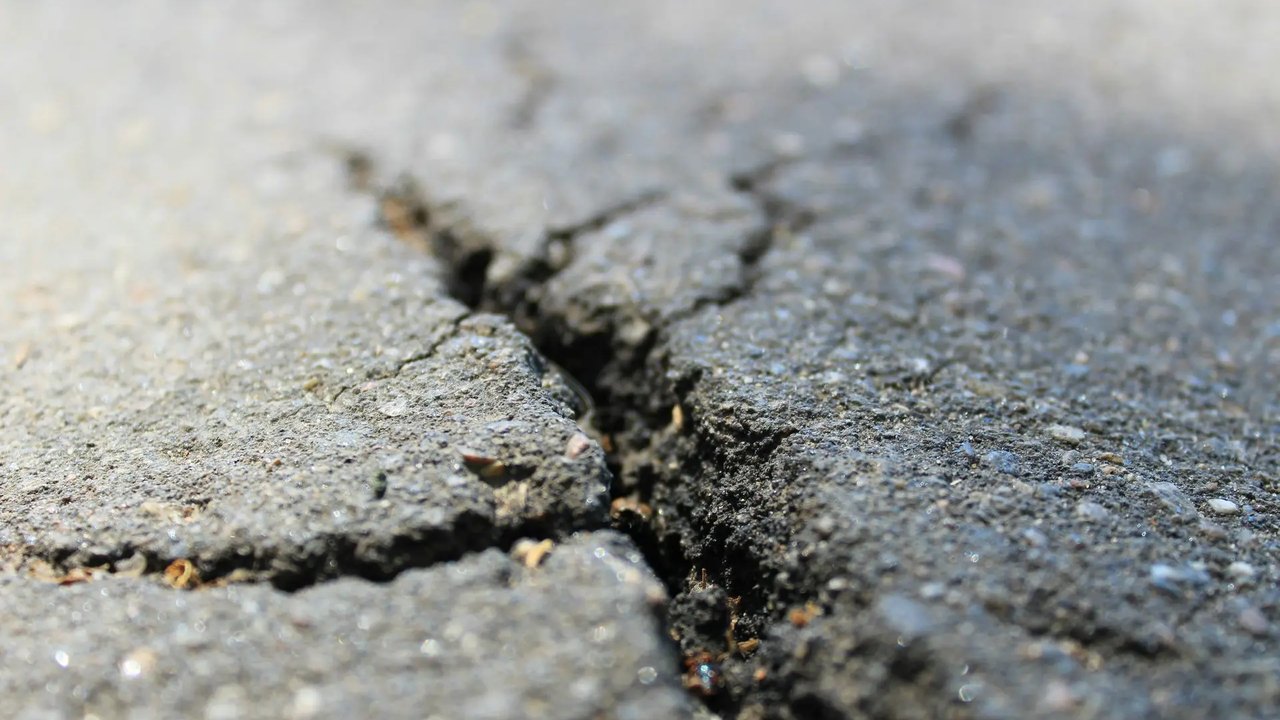
Concrete is a commonly used building material in contemporary society, yet it may develop surface cracks due to factors such as temperature fluctuations, shrinkage, chemical reactions, improper construction practices, external loads, and foundation deformation. Failure to detect and address these cracks promptly can compromise the structural integrity of buildings, leading to significant economic losses and posing serious threats to public safety.
Concrete crack classification
WISIO enables the condition and durability of infrastructure built from different construction materials to be assessed by examining crack size, particularly width and depth. Cracks are indicators of structural integrity and help determine whether repair or full reconstruction is needed to avoid adverse outcomes.
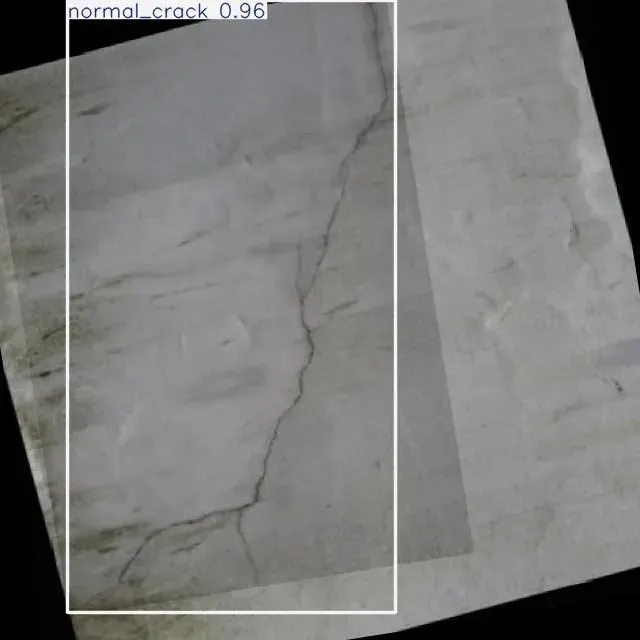
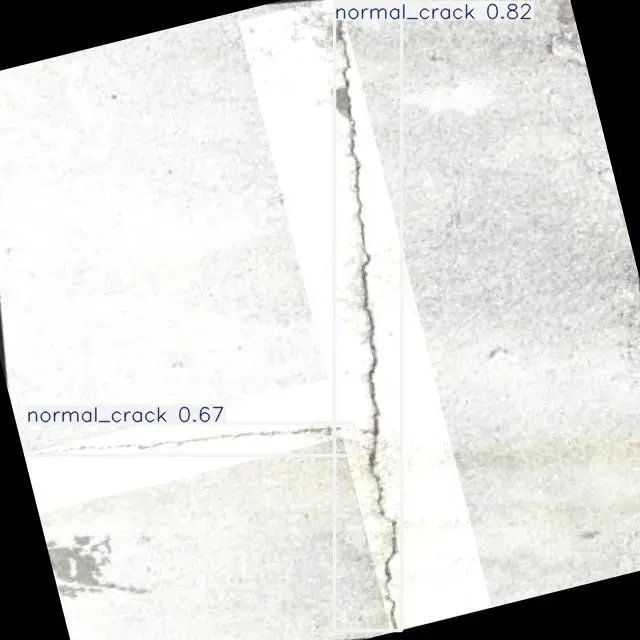
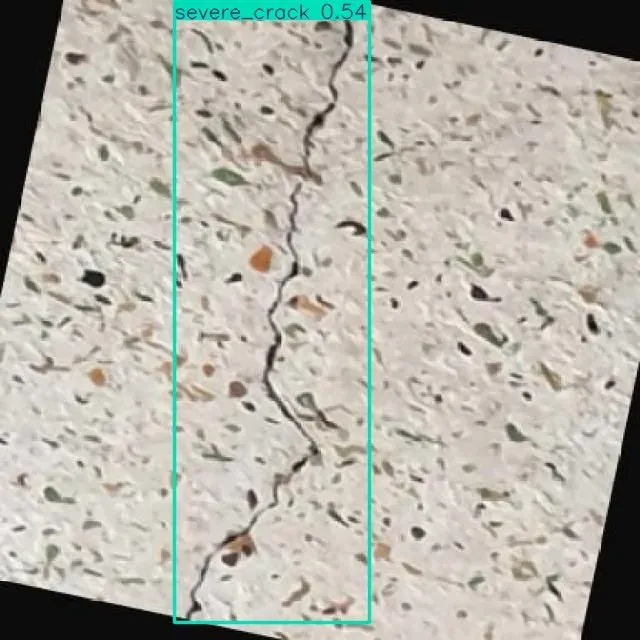
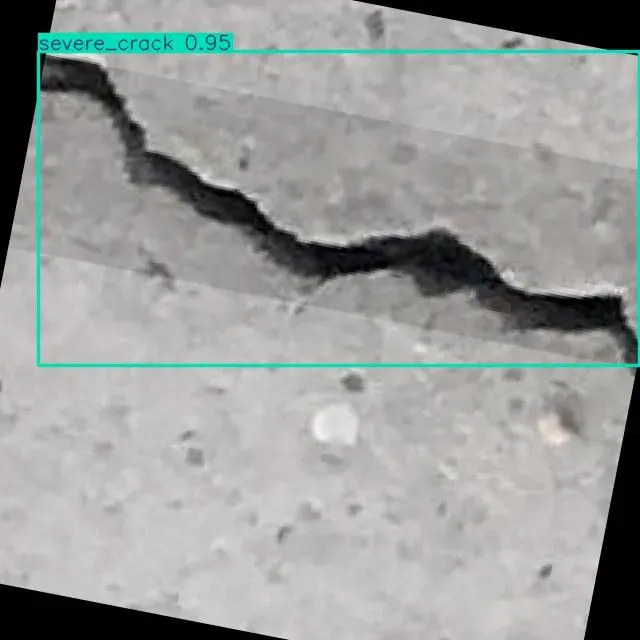
This analysis focuses on four major types of cracks: Normal Cracks, Severe Cracks, Bullet Impact Cracks, and Explosion Impact Cracks. Understanding these crack types is crucial for maintaining safety and ensuring the durability of infrastructure.
Examples of Cracks
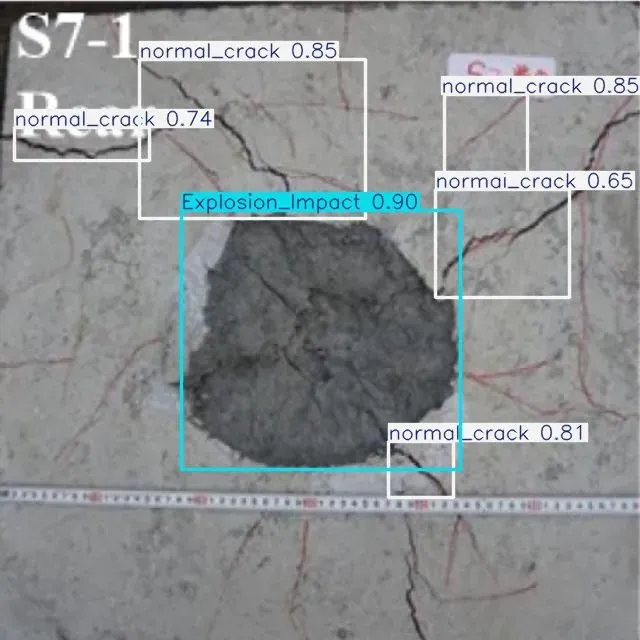
Normal Cracks
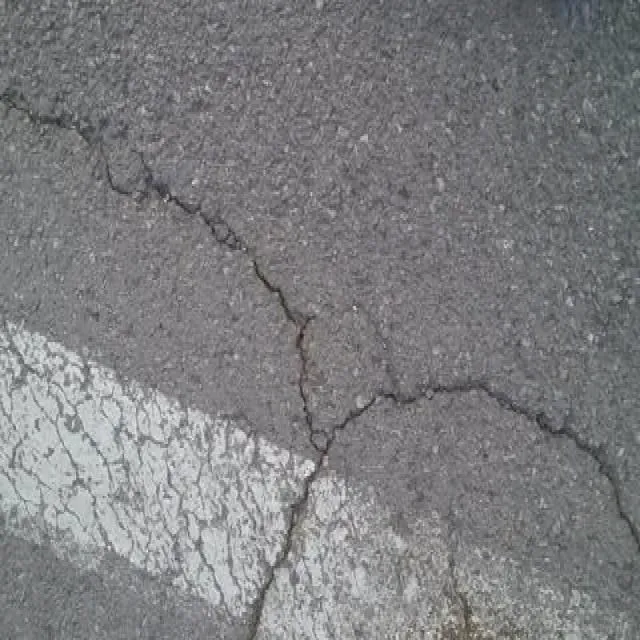
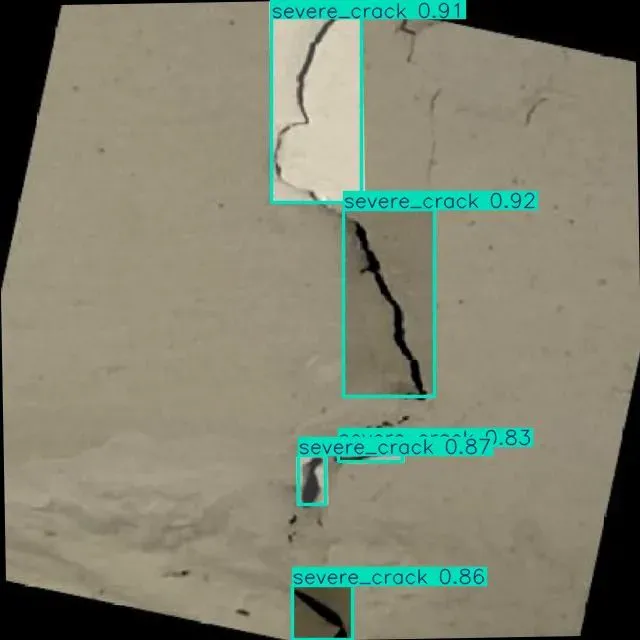
Severe Cracks
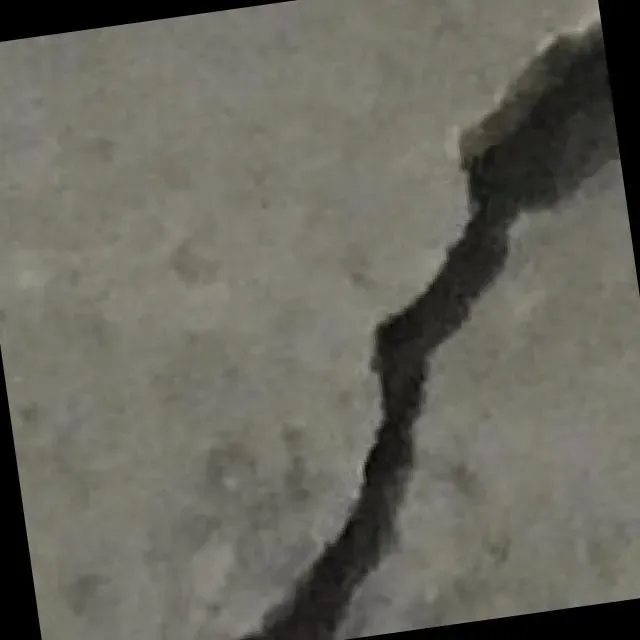
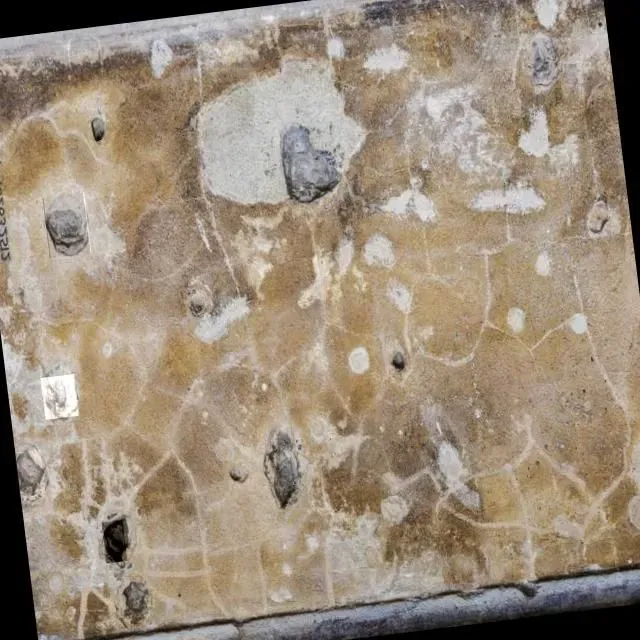
Bullet Impact Cracks
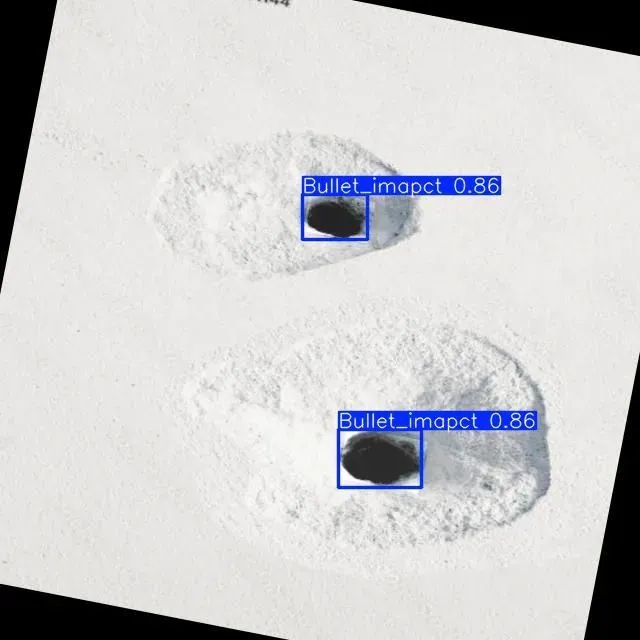
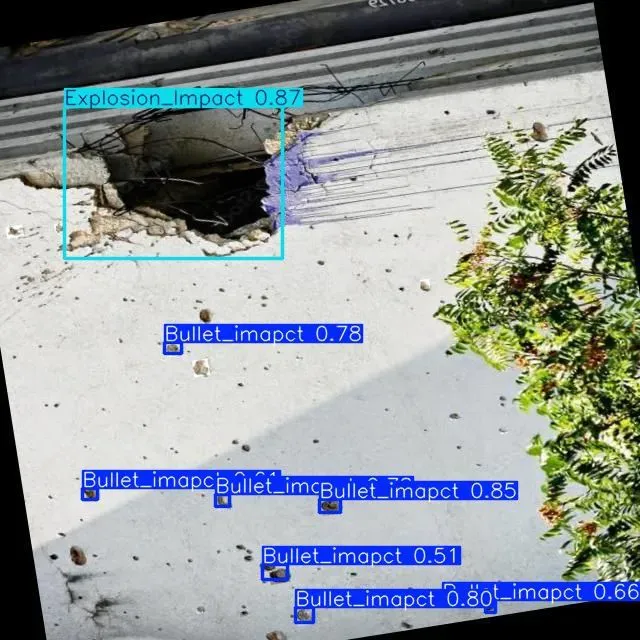
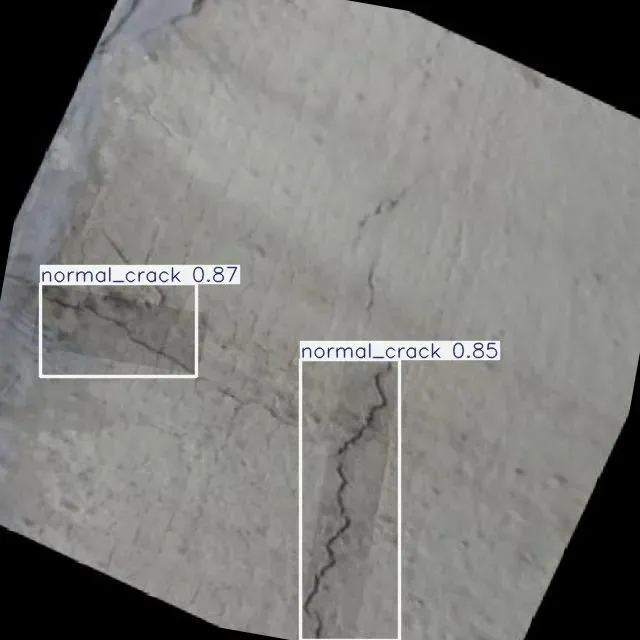
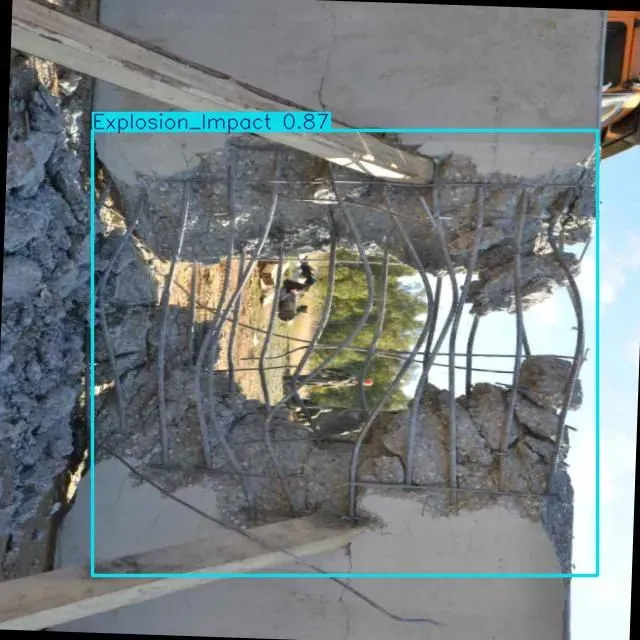
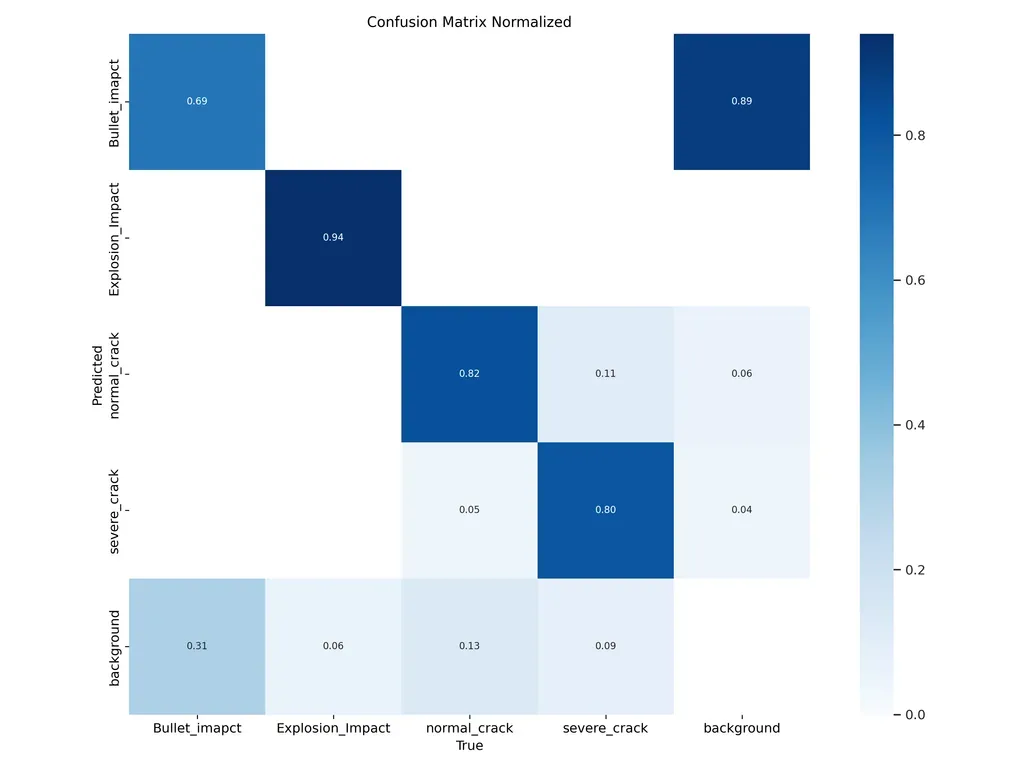
Detection results after training on our dataset
Applications
The dataset we employ enables us to generate outcomes that serve as the foundation for building diverse use cases and marketing our platform to both government and private sectors. By applying this model, we can offer solutions across multiple industries, transforming the platform into a practical tool for government agencies and private enterprises with broad practical value:
- Infrastructure Health Monitoring: Civil engineering firms or government agencies can leverage our results to assess the structural integrity of bridges, roads, tunnels, and buildings. The classification of different types of cracks helps prioritize repairs or maintenance based on severity and type, ensuring timely intervention.
- Military Applications: In defense scenarios, our model can assist in detecting bullet impacts or explosion damage, which is critical for damage assessment in military training exercises or war zones.
- Insurance Claim Investigations: Insurance companies can use the model’s findings to evaluate damage claims. It helps distinguish between general wear and tear (e.g., normal cracks) and severe incidents like bullet impacts or explosions, supporting accurate claims assessments.
- Disaster Assessment: After natural or man-made disasters, such as earthquakes or bombings, our model can help emergency teams assess structural safety, prioritize necessary repairs, and gather evidence for further investigation.
- Historic Preservation: Preservation societies or museums could use this model to monitor historic buildings and monuments for damage over time. By identifying critical damage such as severe cracks, bullet impacts, or explosion damage, appropriate preservation efforts can be made.